

Your old smartphone sits in a drawer. That broken laptop collects dust in the garage. Meanwhile, your city’s landfills overflow with discarded electronics that will take centuries to decompose. Sound familiar? You’re not alone, and the consequences reach far beyond cluttered cupboards.
Electronic waste has exploded into one of the most pressing environmental challenges of our time. The numbers tell a stark story: 62 million tonnes of e-waste flooded the planet in 2022, and projections show this mountain growing to 82 million tonnes by 2030. That’s enough to form a bumper-to-bumper line of trucks circling the equator.
Here in South Africa, we generate approximately 360,000 tonnes of e waste annually, yet only 10-12% finds its way into proper recycling channels. The rest? It ends up poisoning our soil, contaminating water sources, or sitting dormant in homes across the country. This crisis demands immediate attention, and understanding why matters just as much as knowing what to do about it.
What Exactly Counts as E-Waste?
Electronic recycling covers any device with a plug or battery. Think beyond your obvious gadgets – kettles, toasters, vacuum cleaners, and even LED lights qualify as e-waste once they reach the end of their life. Modern households harbour dozens of these items, many forgotten in storage while they slowly leak toxic chemicals.
The diversity of electronic products keeps expanding. Fitness trackers, smart home devices, electric scooters, and solar panels join traditional computers and phones in the growing waste stream. Each item contains valuable materials worth recovering alongside hazardous substances that require careful handling.
The 7 Reasons E-Waste Demands Our Immediate Attention
1. Is E-Waste Growing Faster Than Our Ability to Handle It?
Yes, e-waste generation now outpaces documented recycling efforts by five times. Between 2010 and 2022, global e-waste surged by 82%, while recycling infrastructure struggled to keep up. This gap widens every year as consumption accelerates but collection systems lag behind.
South Africa mirrors this troubling pattern. Our e-waste grows three times faster than regular municipal waste, yet Gauteng – responsible for 55% of the nation’s electronic waste – faces a looming landfill crisis. Traditional disposal methods simply cannot cope with the volume, and informal waste pickers bear the brunt of hazardous exposure without proper protective equipment.
2. What Toxic Time Bombs Hide Inside Our Electronics?
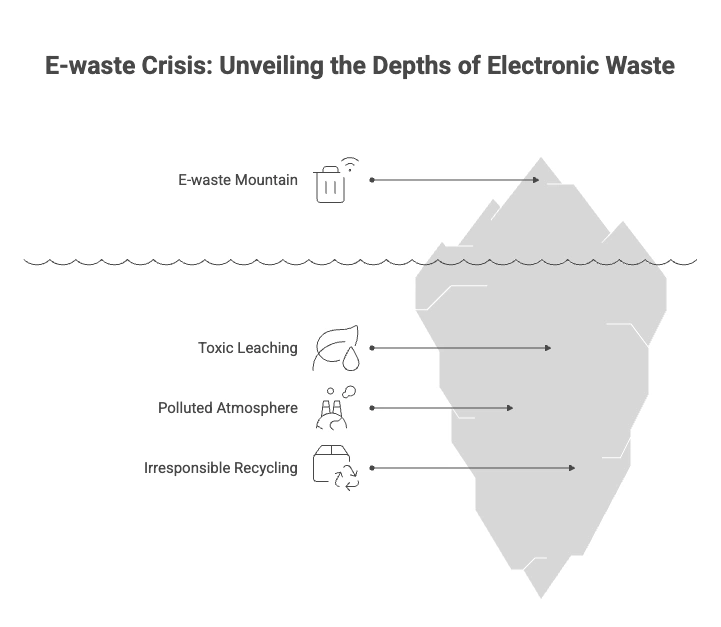
Every electronic device harbours a cocktail of dangerous substances. Lead damages nervous systems and causes developmental delays in children. Mercury attacks the brain and coordination systems. Cadmium targets kidneys and bones, while brominated flame retardants disrupt hormones and reproductive health.
These toxins don’t stay contained. When electronics break down in landfills, chemicals leach into groundwater, contaminating drinking supplies for entire communities. Informal recycling operations that burn e-waste to extract metals release hydrocarbons into the air, accelerating climate change while exposing workers and nearby residents to severe health risks.
3. Why Are We Throwing Away Billions in Valuable Resources?
The 62 million tonnes of e-waste generated in 2022 contained raw materials worth $91 billion. Yet only $19 billion found recovery through proper recycling. This massive waste of resources accelerates our climate crisis by forcing increased mining and manufacturing.
Consider these staggering recovery opportunities:
| Source | Recoverable Materials per 1 Million Units | Estimated Value |
|---|---|---|
| Mobile Phones | 16,000 kg copper, 350 kg silver, 34 kg gold, 15 kg palladium | Hundreds of thousands in recovered value |
| Laptops/Computers | High concentrations of gold, copper, and rare earth elements | Critical for future technologies |
| Large Appliances | Steel, aluminium, copper wiring, motors | Significant industrial reuse potential |
South Africa loses millions annually by failing to capture these materials. The Western Cape alone generated e-waste worth between R55 million and R110 million in 2020, yet most of this value disappeared into landfills or informal channels with minimal recovery.
4. How Does E-Waste Fuel the Climate Emergency?
Electronics manufacturing carries an enormous carbon footprint. Producing a single computer requires 1.5 tonnes of water, 240 kilograms of fossil fuels, and 22 kilograms of chemicals. Mining rare earth elements devastates landscapes and consumes massive energy.
Proper recycling cuts this cycle dramatically. Recovered materials require far less energy to process than virgin resources. Yet when we dispose of electronics improperly, we force continued extraction while releasing stored greenhouse gases from refrigerants and other chemicals. Currently, just 1% of rare earth element demand gets met through e-waste recycling, despite these materials’ critical importance for renewable energy technologies.
5. Why Does E-Waste Hit Developing Communities Hardest?
Wealthy nations export their electronic waste problems, often illegally, to countries with weaker regulations. Africa receives only 2.9 million tonnes of the world’s e-waste generation but suffers disproportionate health and environmental impacts. Ghana and Nigeria have become notorious dumping grounds where children dismantle electronics under minimal safety conditions.
Within South Africa, informal waste pickers – an estimated 10,000 strong – work in townships like Diepsloot and Soweto, extracting value from discarded electronics without training or protection. These communities face heightened exposure to toxic substances while generating crucial recycling capacity that formal systems often ignore.
6. Can Your Hoarding Habits Actually Make Things Worse?
Surprisingly, yes. Research shows South Africans are “e-waste hoarders,” with large percentages of non-functional electronics sitting dormant in homes. This behaviour stems from uncertainty about disposal options and concerns about data security on old devices.
Hoarding delays recovery of valuable materials and creates disposal surges when households finally purge multiple items simultaneously. Learning practical home management strategies helps create consistent recycling habits instead of boom-bust patterns that strain collection infrastructure.
7. What Happens When Only 81 Countries Have E-Waste Laws?
Legislative gaps create perfect storms for environmental disaster. Without robust regulations, manufacturers face no incentives to design recyclable products or take responsibility for end-of-life disposal. South Africa implemented Extended Producer Responsibility regulations in 2020, requiring manufacturers to finance take-back and recycling programs.
However, enforcement remains inconsistent. Many consumers remain unaware of their recycling options, and infrastructure hasn’t expanded quickly enough to meet demand. Countries with strong e waste legislation like Norway, Estonia, and Iceland achieve recycling rates above 60%, proving that policy frameworks make tangible differences.
How Can South Africans Turn This Crisis Around?
Change starts with awareness but requires action. Every household can contribute meaningfully by seeking out proper e waste recycling near me options instead of tossing electronics into general waste streams.
South Group Recycling operates collection centres across South Africa specifically designed to handle electronic waste responsibly. We offer convenient drop-off locations, collection services for larger quantities, and even provide compensation for certain valuable electronics. Data destruction services ensure your personal information stays protected throughout the recycling process.
Ready to make a difference? Gather those forgotten gadgets, outdated devices, and broken appliances cluttering your space. South Group Recycling makes responsible disposal simple and rewarding. Whether you have a single phone or office worth of equipment, we’re here to help you recycle right.
The Time for Action Is Now
E-waste represents both crisis and opportunity. The crisis unfolds in contaminated water sources, sick children exposed to toxins, and billions in wasted resources. The opportunity emerges when communities, businesses, and governments commit to proper collection, responsible recycling, and circular economy principles.
South Africa stands at a crossroads. We can continue allowing 88-90% of our e-waste to escape into landfills and informal channels, or we can build the infrastructure and habits needed to capture value while protecting health and environment. The choice seems obvious, yet it requires participation from every household.
Your old electronics don’t belong in drawers or dumps. They belong in skilled hands that can extract precious materials, neutralise hazardous substances, and close the loop on resource consumption. Each device you recycle properly contributes to solving one of the 21st century’s most pressing environmental challenges.
The mountains of e-waste won’t shrink themselves. But with informed consumers, committed recyclers like South Group Recycling, and strengthened regulations working together, we can transform this waste stream from threat to resource. Your contribution matters—now is the moment to act.