
Key Takeaways
- Tantalum, tin, niobium, and beryllium are all classified as critical minerals by the EU and US due to supply concentration and economic importance
- Tantalum price is rising as 5G infrastructure, EV battery systems, and medical devices drive demand for high-reliability capacitors
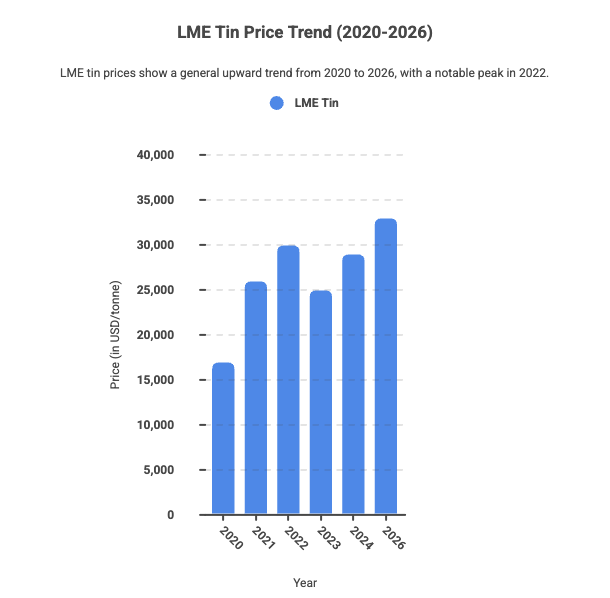
- Tin price has surged to multi-year highs on the LME, driven by electronics solder demand and the rapid expansion of renewable energy systems
- Niobium is increasingly vital for high-strength steel in EVs and wind turbines, with Brazil controlling over 90% of global production
- Beryllium remains one of the highest-value industrial metals by weight, used in aerospace, defence, and precision telecommunications equipment
- South Group Recycling buys all four minerals and mineral-bearing scrap across South Africa, with collection available for qualifying volumes
The energy transition, 5G rollout, and defence spending surge are creating exceptional demand for minerals that most people have never heard of. Tantalum, tin, niobium, and beryllium are not headline commodities like gold or platinum – but in 2026, they are among the most commercially significant materials in the world. For South African businesses, scrap yards, e-waste processors, and industrial operators sitting on these materials, understanding the demand drivers is the difference between leaving money on the table and getting a fair market price through specialist mineral trading.
What Are Tantalum, Tin, Niobium, and Beryllium – and Why Do They Matter?
These four minerals occupy a unique position in the global economy: each is critical to advanced technologies, each faces supply constraints, and each is seeing demand growth that outpaces available supply. According to the International Energy Agency’s Critical Minerals Market Review, demand for key minerals from clean energy technologies is set to multiply several times over by 2030 – with the steepest growth curve already underway. That combination is the fundamental driver of rising prices across all four in 2026.
Tantalum: The Invisible Metal Inside Every Smartphone
Tantalum is a dense, corrosion-resistant metal used to manufacture miniature capacitors that store and regulate electrical charge. A typical smartphone contains 5 to 15 tantalum capacitors; a modern fighter jet may contain thousands. The tantalum price has been climbing steadily as demand from 5G base stations, EV battery management systems, medical implants, and satellite communications continues to grow. Supply remains concentrated in the DRC and Rwanda, making recycled tantalum from e-waste an increasingly important secondary source.
Tin: From Soldering Wire to Battery Anodes
Virtually every printed circuit board uses tin-based solder to join components, and the explosive growth in EV production, renewable energy systems, and industrial automation is translating directly into rising tin demand. Beyond solder, tin is emerging as a candidate for next-generation battery anode materials – adding a further demand vector. The tin price on the London Metal Exchange (LME) has reflected this surge, reaching multi-year highs in 2025 and maintaining elevated levels into 2026. For a detailed price breakdown, see South Group’s Tin Price Forecast 2026.
Niobium: The Strengthening Agent for the Clean Economy
Niobium is added to steel in quantities as small as 0.1% to dramatically increase its strength, toughness, and weldability. High-strength low-alloy steel containing niobium is used in EV body panels, wind turbine towers, pipelines, and shipbuilding – all sectors expanding rapidly in 2026. Brazil controls over 90% of global niobium production through a single producer, making supply concentration risk exceptionally high and driving sustained commercial interest in recycled niobium from aerospace and industrial scrap.
Beryllium: Rare, Valuable, and Essential for Defence
Beryllium is one of the lightest structural metals and one of the most technically demanding to work with – but its combination of stiffness, thermal stability, and electrical conductivity makes it irreplaceable in aerospace structural components, satellite optics, defence systems, and high-precision telecommunications equipment. The USGS Critical Minerals List consistently names beryllium as one of the highest supply-risk materials for the US economy – a designation that underpins its price premium globally.
What Is Driving Demand for These Minerals in 2026?
Three structural trends are converging to drive exceptional demand: the energy transition, the 5G and electronics manufacturing boom, and increased defence and aerospace spending. Each is a multi-decade investment cycle – not a short-term spike.
The Energy Transition: EVs, Renewables, and Grid Storage
Every EV requires significantly more critical minerals than the internal combustion engine vehicle it replaces. Tin is used in battery management PCBs and throughout the vehicle’s electronics. Niobium-strengthened steel is used in body panels and structural components to reduce weight without sacrificing crash performance. Tantalum capacitors appear throughout battery monitoring and power regulation systems. Wind turbines, solar inverters, and grid battery installations add further demand across all four minerals. The IEA projects that mineral demand from clean energy alone will increase several-fold by 2030.
5G Infrastructure and Advanced Electronics
The global 5G rollout requires far higher base station density than 4G – each installation containing multiple tantalum capacitors, tin-soldered circuit boards, and beryllium-copper connectors for high-frequency signal management. Every new generation of electronics is more mineral-intensive than the last, even as devices shrink, because higher performance requires more sophisticated power management and more reliable components.
Defence and Aerospace Spending
Geopolitical tensions have driven significant increases in defence budgets across NATO, Asia-Pacific, and Africa in 2025-2026. Beryllium is used in structural and optical components; niobium in superalloy turbine blades; tantalum in electronics and armour applications; and tin in electronics and protective coatings. These procurement programmes are long-cycle and price-inelastic – providing a demand floor that supports prices even when other sectors pull back.
EU and US Critical Minerals Designations
The European Commission’s Critical Raw Materials Act (2023) and the USGS critical minerals list both name all four minerals as strategically significant. For South African sellers and traders, operating in a region that supplies materials critical to Western supply chain security is a meaningful commercial advantage. Critical Minerals in the Energy Transition: Why Tantalum, Niobium and Beryllium Matter – and How South African Sellers Can Benefit explores this in depth.
Prices at a Glance: Where Each Mineral Stands in 2026
| Mineral | Primary Use in 2026 | Price Trend | Key Scrap Forms |
|---|---|---|---|
| Tantalum | Capacitors, electronics, aerospace | Rising – supply constrained, EV and 5G demand growing | Capacitor scrap, powder, bar, carbide |
| Tin | Solder, electronics, battery anodes | Elevated – LME above long-term average, strong electronics demand | Solder dross, tin plate, tinplate separations |
| Niobium | HSLA steel, superalloys, EV components | Stable-high – Brazilian supply dominance, industrial demand steady | Superalloy scrap, niobium oxide, aerospace components |
| Beryllium | Aerospace, defence, precision electronics | Premium – scarcity-driven, defence demand floor | BeCu alloy scrap, beryllium metal, precision components |
South Africa’s Role in the Critical Minerals Picture
South Africa is not a primary producer of all four minerals, but it occupies a strategically significant position as a regional trading and recycling hub for sub-Saharan Africa – and as a source of high-grade secondary supply from its advanced industrial and electronics sectors.
South Africa’s electronics manufacturing, mining equipment, and defence industries generate tantalum-bearing scrap that commands strong prices from specialist buyers. The country is a substantial consumer of tin through its automotive, food packaging, and industrial sectors – all of which generate commercially viable scrap streams. Niobium-bearing aerospace components from maintenance and repair operations are a significant secondary source. Beryllium-copper alloy scrap – the most commonly available beryllium-bearing form – is generated by precision engineering, electrical, and defence manufacturing operations across the country.
South Africa’s e-waste stream is particularly underexploited. Despite containing recoverable tantalum, tin, niobium, and beryllium-copper, the majority of South African e-waste is either landfilled or processed through informal channels that do not recover these high-value minerals. Working with South Group Recycling, a specialist with the technical capability to identify and value these materials accurately, is the most effective route to commercial recovery. How to Tell if Your E-Waste Contains Tantalum or Other High-Value Minerals is the practical starting point for any e-waste processor assessing their material.
How to Sell High-Value Tech Minerals to South Group Recycling in 2026
South Group Recycling purchases tantalum, tin, niobium, beryllium, and a wide range of other mineral-bearing scrap through a transparent, professionally managed process designed for businesses, scrap yards, e-waste processors, and industrial operators across South Africa.
What South Group Buys
For tantalum: capacitor scrap, bar and sheet, powder and sputtering targets, carbide, and tantalum-containing alloy scrap. For tin: solder wire and bar scrap, solder dross and skimmings, tinplate separations, and tin-coated copper wire. For niobium: aerospace superalloy scrap (INCONEL, Hastelloy, and similar alloys), niobium oxide powder, and niobium-bearing steel from industrial sources. For beryllium: BeCu alloy scrap in all forms (springs, connectors, precision components), beryllium metal and oxide, and beryllium-aluminium alloys from aerospace and defence applications.
How Pricing and Assessment Works
Pricing is tied to current market rates and determined by scientific analysis – not visual estimates. South Group Recycling uses in-house XRF analysis to identify elemental composition rapidly and accurately, or arranges third-party laboratory assay for higher-value materials. The assessed metal content is then valued against current market reference prices, with transparent adjustments for processing and refining costs. Standard documentation requirements include valid government-issued ID, proof of material ownership or origin, and company registration documents for business sellers. All transactions comply with the Second-Hand Goods Act (Act 6 of 2009) and South African mineral trading regulations.
Service Areas and Collection
South Group operates across Johannesburg, Cape Town, Pretoria, and Durban. Collection services are available for qualifying volumes – relevant for businesses with regular streams of e-waste, industrial scrap, or manufacturing process waste. Full details on documents required, assay procedures, payment terms, and contact details are covered in the Step-by-Step Guide: How to Sell High-Value Minerals to South Group in 2026.
The Critical Minerals Opportunity Is Here
Tantalum, tin, niobium, and beryllium are physical materials sitting in e-waste piles, scrap yards, industrial off-cuts, and end-of-life equipment across South Africa right now. The global demand drivers underpinning prices for all four in 2026 are structural – the result of decade-long investment programmes in clean energy, advanced electronics, and defence. For South African sellers and processors, the window to benefit from elevated mineral trading prices is open and widening.
Whether you have tantalum capacitor scrap from e-waste processing, tin-bearing solder waste from electronics manufacturing, niobium superalloy components from aerospace maintenance, or beryllium-copper off-cuts from precision machining, South Group Recycling is equipped to assess, price, and purchase your material accurately and transparently. With over 10 years of experience and operations spanning 16 African countries, South Group is South Africa’s specialist partner for high-value mineral trading.
Ready to Sell Your High-Value Minerals?
Get a fair, assay-based price from a specialist recycler with over 10 years of experience across 16 African countries. We buy tantalum, tin, niobium, beryllium, and more.