
Rhodium surged 20% through 2025, platinum reached 14-year highs, and the momentum shows no signs of slowing as we enter 2026. If you’ve been sitting on an old catalytic converter, now might be the perfect time to act.
The platinum group metals (PGMs) market has entered an extraordinary period. Price rallies that began in late 2025 have carried into the new year, driven by global supply disruptions, tightening inventories, and sustained industrial demand. For South Africans with scrap converters, this translates into significantly better returns when selling to established buyers like South Group Recycling.
What Drove PGM Prices Up in Late 2025?
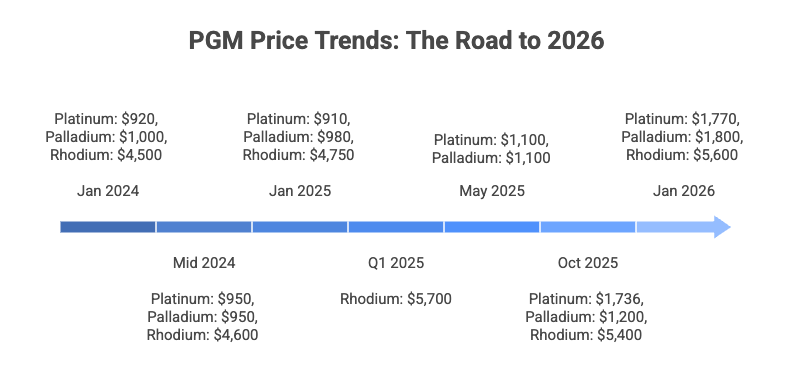
Three major forces converged to push platinum, palladium, and rhodium values higher through the second half of 2025. South African mining disruptions, including flooding that affected operations, constrained primary supply of these critical metals. Russia, another significant PGM producer, continued facing economic sanctions that limited its export capacity. Meanwhile, global inventories thinned to their lowest levels in decades.
According to the World Platinum Investment Council’s Platinum Quarterly Q3 2025 report, the platinum market recorded its third consecutive significant annual deficit – totalling 692,000 ounces. Supply remained constrained, declining 2% year-on-year to just 7.1 million ounces. These persistent shortfalls have profound implications for anyone considering catalytic converter recycling in 2026.
The rhodium story proved even more dramatic. Inventories dropped to approximately 349,000 troy ounces – their lowest level in at least 40 years. Metals Focus analysts noted that rhodium “remains susceptible to physical market squeezes” given the extremely tight conditions.
How Do These Market Conditions Affect Your Converter’s Value in 2026?
Higher metal prices directly increase what recyclers pay for scrap converters. The relationship works simply: when platinum, palladium, and rhodium command premium prices on global commodity markets, the catalytic converter scrap price rises accordingly. Established recyclers like South Group Recycling track these markets daily, adjusting their offers to reflect current conditions.
PGM Market Outlook: What 2026 Holds
| Metal | Late 2025 Performance | 2026 Forecast | Key Market Driver |
|---|---|---|---|
| Platinum | Rose ~52%, hit 14-year highs | Bullish ($1,710 – $2,340/oz range) | Third consecutive supply deficit |
| Palladium | Moderate gains amid volatility | Moving toward market balance | Growing recycling supply |
| Rhodium | Surged ~20% | Expected to outperform Pt & Pd | Inventory at 40-year lows |
Forecasts based on analyst projections from Metals Focus and WPIC. Market conditions can change rapidly.
The platinum market remains particularly compelling for 2026. Analyst consensus points toward continued appreciation, with some projections reaching as high as $2,340 per ounce. Supply constraints in South Africa – which produces over 70% of global primary platinum – show no immediate resolution. Bringing new mines online takes over a decade, meaning supply cannot quickly respond to elevated prices.
Why Is Recycling Your Catalytic Converter Worthwhile Now?
Strong catalytic converter prices South Africa represent just one part of the equation. The environmental benefits add compelling reasons to recycle rather than discard these valuable automotive components.
Research published in the National Center for Biotechnology Information highlights how PGM recycling addresses critical sustainability challenges. Primary mining operations consume enormous energy and generate substantial carbon emissions. Recycling automotive catalytic converters requires only 10% of the energy compared to extracting metals from ore, while cutting carbon emissions by up to 70%.
Each converter you recycle helps conserve approximately 15 kilograms of raw ore that would otherwise need extraction. Your old exhaust component contributes to a circular economy that reduces pressure on finite mineral resources.
What Precious Metals Does Your Converter Contain?
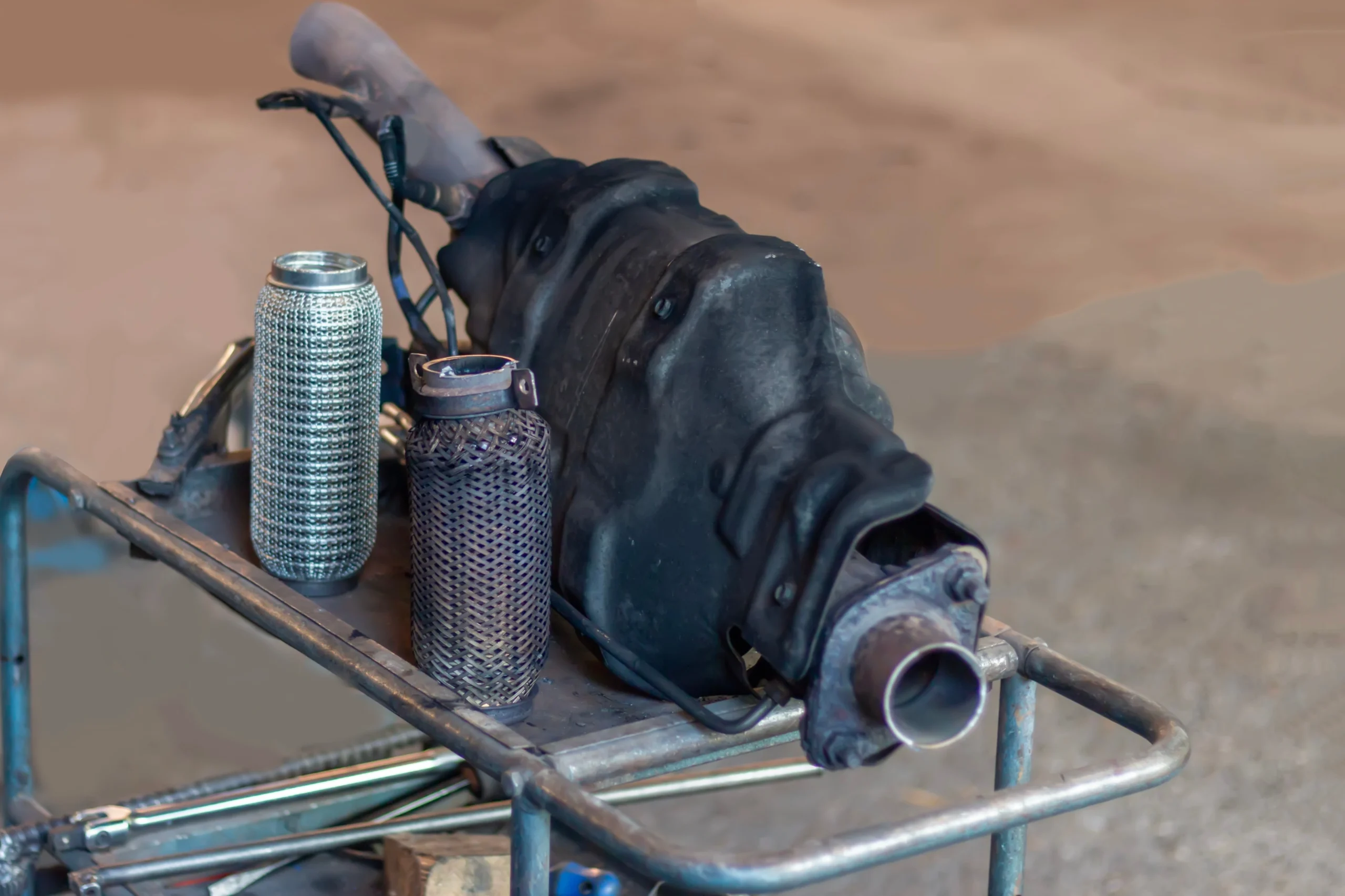
Every catalytic converter contains varying amounts of platinum, palladium, and rhodium. These platinum group metals serve as catalysts that transform harmful exhaust gases – carbon monoxide, hydrocarbons, and nitrogen oxides – into less harmful emissions like carbon dioxide, water vapour, and nitrogen gas.
The precise metal content depends on several factors:
- Vehicle make and model: Luxury and high-performance vehicles typically contain higher concentrations
- Engine type: Diesel engines favour platinum; petrol engines rely more heavily on palladium
- Manufacturing year: Older converters sometimes contain different metal ratios than modern units
- OEM versus aftermarket: Original equipment converters generally contain significantly more precious metal than replacement units
Professional recyclers use advanced analytical equipment – typically X-ray fluorescence (XRF) technology or inductively coupled plasma (ICP) analysis – to determine exact metal content. This precise evaluation ensures you receive fair compensation reflecting your converter’s actual value.
How to Get the Best Catalytic Converter Scrap Price in South Africa
Maximising your return requires understanding how pricing works and choosing the right buyer. The catalytic converter price you receive depends on current metal market conditions, your converter’s specific precious metal content, and the transparency of your chosen recycler.
Does It Matter Where I Sell My Converter?
Absolutely. Not all buyers operate with the same standards or pricing transparency. When searching for catalytic converter buyers near me, consider these factors:
Advanced analytical equipment: Reputable recyclers invest in professional testing technology. Accurate assays mean fair pricing – neither you nor the buyer should guess at metal content.
Real-time market tracking: Precious metal prices change constantly. Established operations like South Group Recycling maintain access to live pricing data, ensuring their offers reflect current market conditions.
Environmental compliance: Proper catalytic converter handling requires adherence to environmental and safety regulations. Converters contain substances that demand careful processing to avoid contamination risks.
Transparent processes: Trustworthy recyclers explain how they determine value and provide clear documentation for transactions.
For guidance on monitoring price movements yourself, read our detailed guide on how to stay updated on catalytic converter scrap prices in South Africa.
Recycling vs Mining: Understanding the Bigger Picture
The current PGM market tightness stems partly from limited primary supply growth. South Africa produces over 70% of global primary platinum and more than 80% of rhodium, ruthenium, and iridium. Mining operations face ongoing challenges including labour costs, infrastructure constraints, and power sector disruptions.
Recycling offers a critical secondary supply stream. According to industry analysts, secondary supply from catalytic converter recycling operations helps stabilise markets during periods of primary supply constraints. Your decision to recycle contributes to this essential supply diversification.
Explore this topic further in our article examining recycling vs mining catalytic converters and why both matter for global metal markets.
What Types of Converters Hold the Most Value?
Ceramic core converters generally fetch higher prices than metallic alternatives. The ceramic substrate allows for more accurate analysis of precious metal content, giving recyclers confidence in their valuations. Metallic converters, with their spiral internal structure, prove harder to assess precisely and typically command fixed prices.
Large converters from trucks, SUVs, and commercial vehicles often contain substantially more PGM material than small passenger car units. General Motors converters and those from premium European manufacturers – BMW, Mercedes-Benz, Audi – frequently contain higher precious metal concentrations.
Hybrid vehicles present particularly interesting opportunities. Their catalytic converters often feature superior platinum and palladium content due to the specific emissions control requirements these powertrains demand.
Ready to Sell? Here’s What to Expect
The process with established recyclers like South Group Recycling follows a straightforward path:
- Initial consultation: Contact the recycler with details about your converter(s), including vehicle make, model, and any visible serial numbers
- Evaluation: Professional assessment determines precious metal content using calibrated analytical equipment
- Price offer: You receive a quote based on current market conditions and your converter’s specific metal composition
- Transaction completion: Upon agreement, payment processes quickly – often same day for established relationships
South Group Recycling maintains facilities across South Africa’s major metropolitan areas, including Johannesburg, Cape Town, Durban, and Pretoria. Collection services accommodate bulk orders, making the process convenient regardless of your location.
The Bottom Line: The Momentum from 2025 Continues
The price rallies that began in late 2025 have established strong foundations heading into 2026. Analysts project continued market tightness through at least the end of this year, with some forecasting even stronger gains if supply constraints persist.
If you’ve wondered whether your old catalytic converter has value, the answer is almost certainly yes. Current catalytic converter prices South Africa reflect genuine market strength driven by fundamental supply-demand imbalances that took years to develop.
Rather than letting that converter sit in storage or ending up in landfill – where its metals could contaminate soil and water – consider turning it into cash while supporting sustainable practices. Contact South Group Recycling today for a transparent evaluation based on current market conditions and your converter’s true precious metal content.