
Key Takeaways
- Every converter contains platinum, palladium and rhodium – the same metals South Africa’s Bushveld Complex supplies to the world, and the reason a used unit has real value.
- The recycling process has six stages: collection, decoding and analysis, milling, leaching, refining, and settlement based on measured metal content.
- Assay-based valuation beats flat pricing – flat per-piece offers can undervalue a unit by 30 to 60 percent.
- Depending on the model and market, a single unit can be worth R500 to R25,000 or more.
- Proof of ownership is required – responsible buyers verify sellers to keep stolen units out of the trade.
- Recycling reduces mining pressure: spent catalysts carry far higher metal concentrations than mined ore, so recovery is the most resource-efficient source of these metals.
What Does a Catalytic Converter Do and Why Is It Valuable?
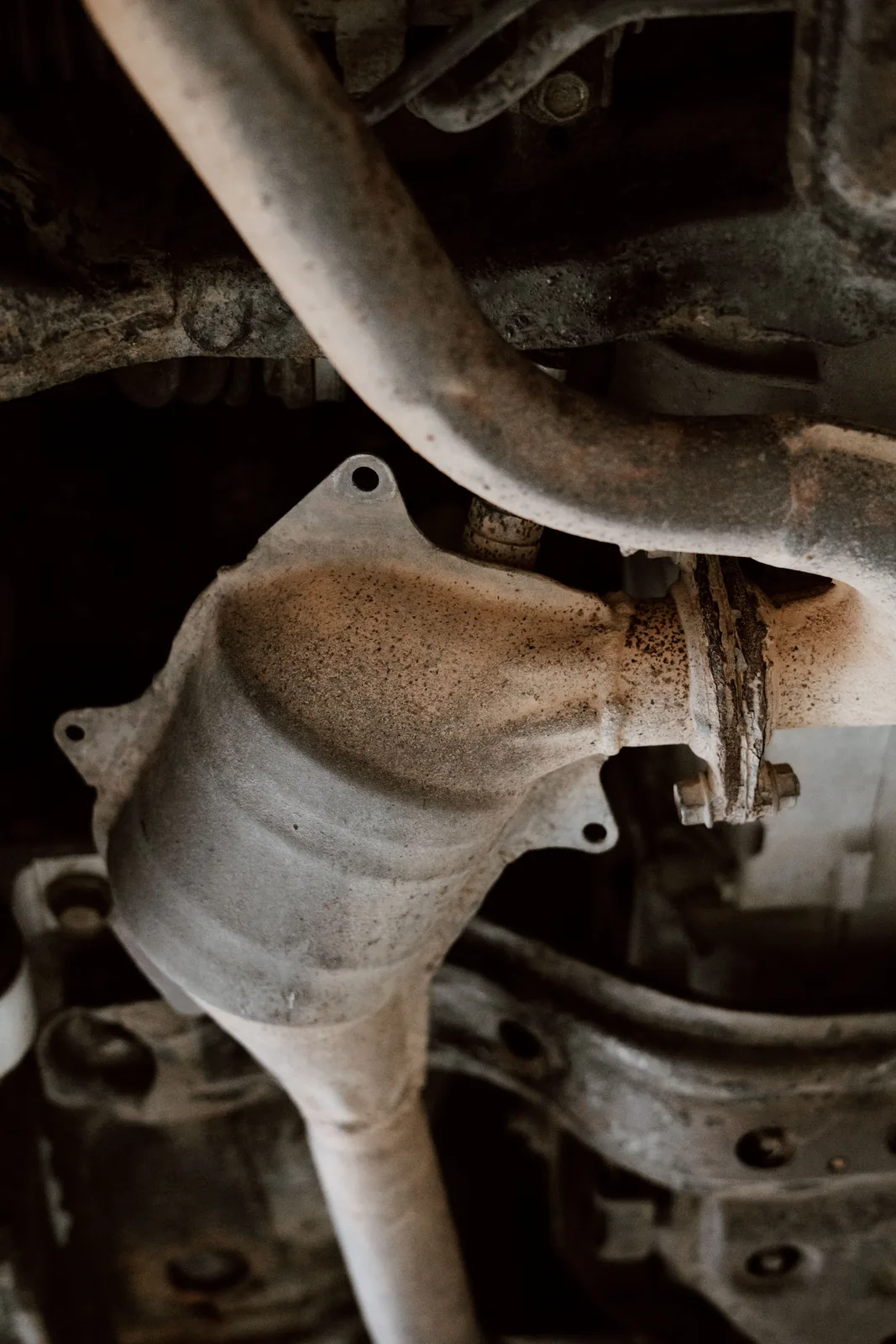
The device sits in a vehicle’s exhaust system and converts harmful gases – carbon monoxide, nitrogen oxides and hydrocarbons – into less harmful carbon dioxide, nitrogen and water vapour. The chemical reactions happen on a honeycomb substrate coated with platinum, palladium and rhodium, and those platinum group metals (PGMs) are what make a spent unit valuable long after the vehicle itself has reached the end of the road. The supply side explains the value. According to the U.S. Geological Survey’s Mineral Commodity Summaries 2026, the world’s largest PGM resources and reserves sit in the Bushveld Complex in South Africa, and the leading use of these metals worldwide is in vehicle emission control. South Africa produces roughly 70 percent of the world’s platinum and about 80 percent of its rhodium – which makes local recovery of these metals a natural industry for the country.What Is Inside a Catalytic Converter?
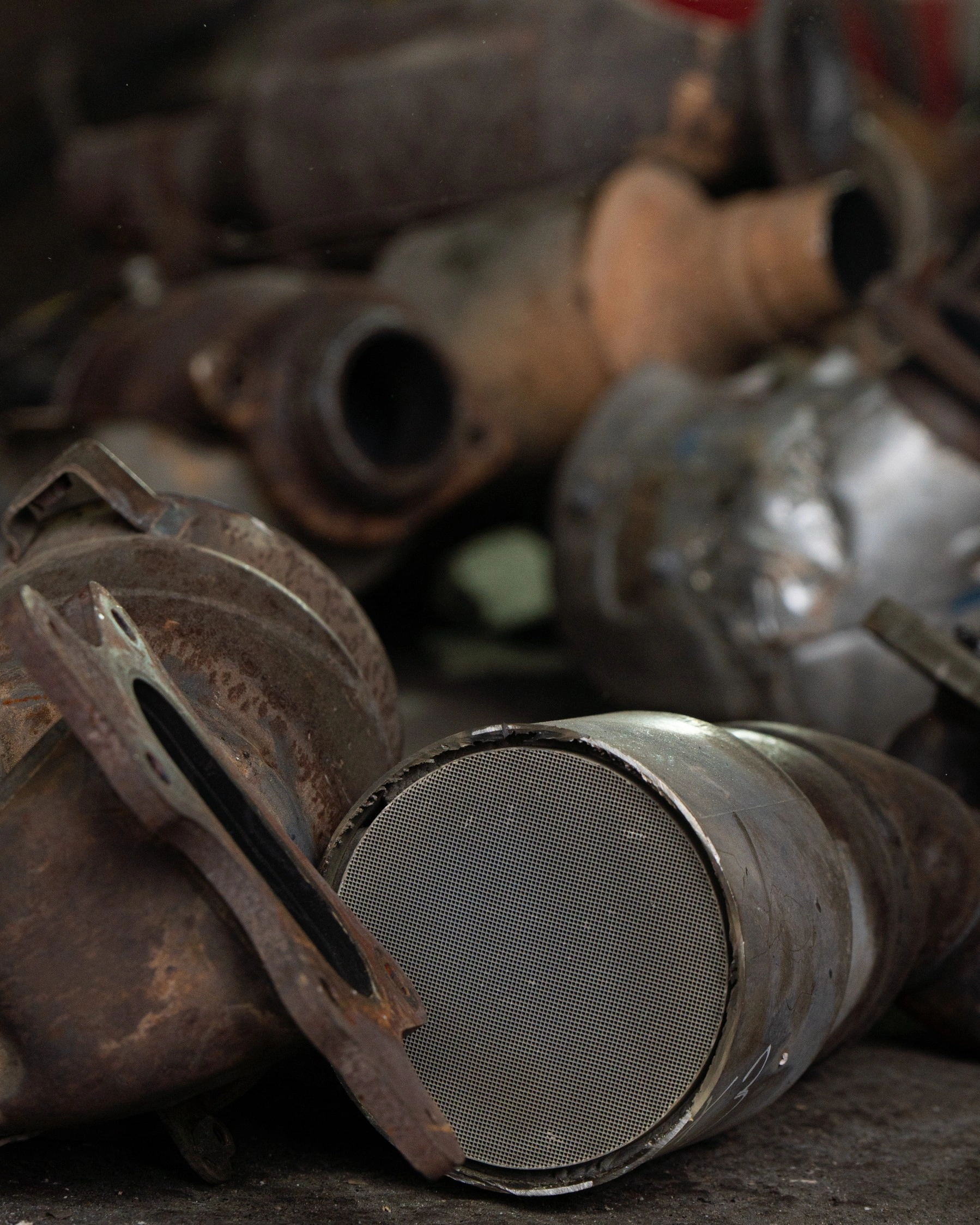
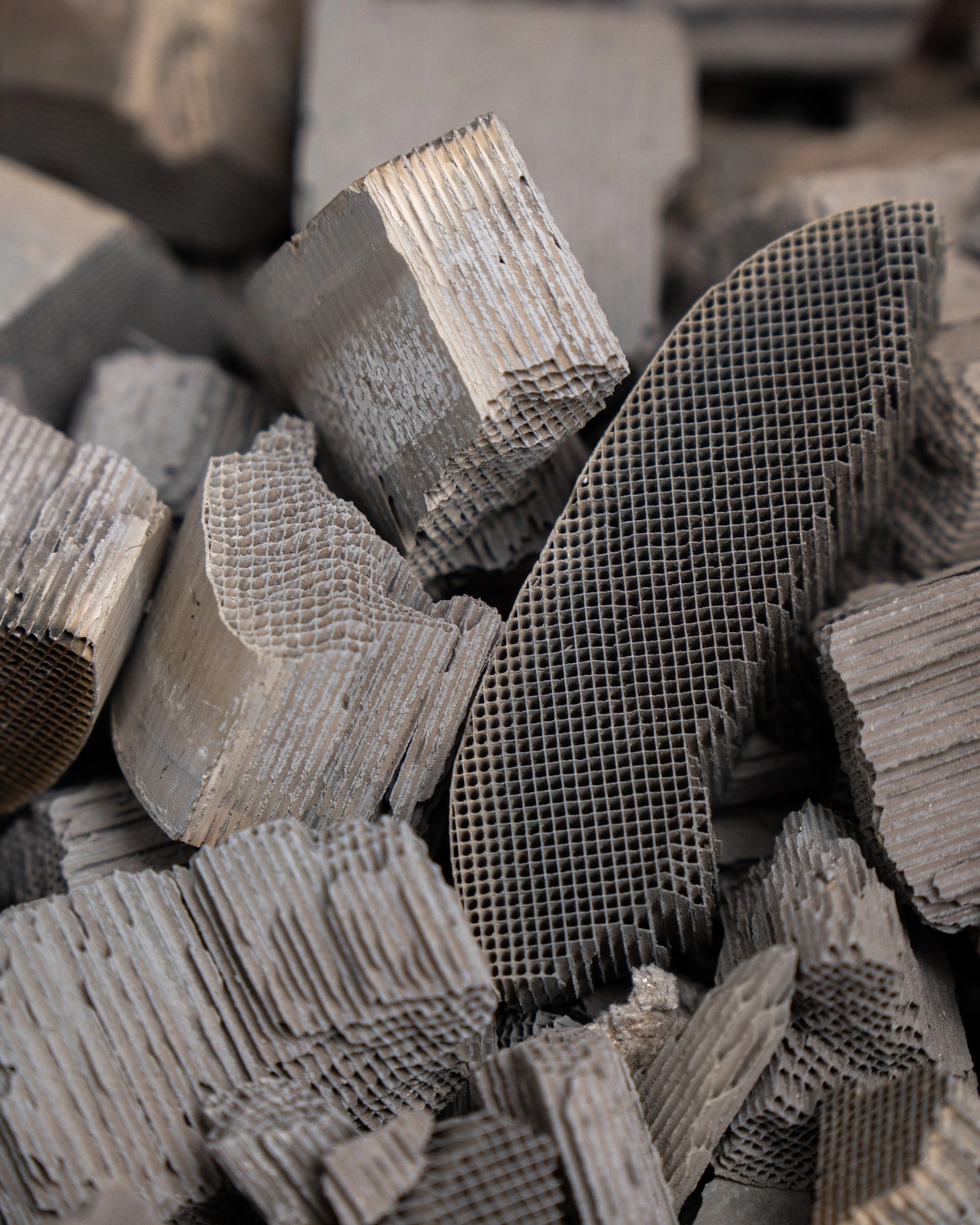
Inside the stainless steel casing sits a honeycomb substrate – ceramic in most passenger cars, metallic in some newer and heavy-duty vehicles – coated with a washcoat that carries the precious metal particles. The honeycomb shape is deliberate: it maximises the surface area over which exhaust gases meet the catalyst, so the chemical reactions can happen fast enough to clean the gas stream at driving speed.Ceramic and Metallic Substrates
Ceramic substrates dominate the passenger car fleet and are the material most recyclers see daily. Metallic substrates appear in vehicles built for demanding conditions and behave differently in processing, which is why correct identification comes before everything else in the recycling chain. Diesel vehicles add their own variations, with oxidation catalysts and particulate filters that can combine ceramic and metallic elements in multi-part assemblies. For the seller, the practical point is simple: the substrate type affects how the unit is processed and valued, and only proper decoding establishes which type you have.Why Converters Fail and End Up in the Recycling Stream
Most units reach recyclers because they stopped working, and the science of how they fail is well documented. A peer-reviewed review in the journal Catalysts identifies the main deactivation mechanisms: thermal damage from overheating, chemical poisoning of the catalyst surface, and fouling by fuel and lubricant deposits. Age and mileage compound all three. The crucial point for recycling is that deactivation does not destroy the metals – a poisoned or heat-damaged unit still contains its platinum, palladium and rhodium, and all of it remains recoverable through proper processing.Why Recycle Catalytic Converters Instead of Scrapping Them?
The case for catalytic converter recycling rests on two pillars: resource efficiency and environmental protection. A spent unit is one of the richest secondary sources of PGMs available – a peer-reviewed review in Cleaner Engineering and Technology notes that PGM concentrations in spent automotive catalysts are considerably higher than in natural ores, where grades run below 10 grams per tonne, and that spent catalysts already supply more than 57 percent of Europe’s PGM needs. For a fuller picture of the local context, read South Group’s guide to understanding catalytic converter recycling in South Africa, and the companion article on why catalytic converter recycling is needed.The Environmental Case
Anyone asking why recycle catalytic converters gets a simple environmental answer: every gram of platinum recovered from a spent unit is a gram that does not need to be mined. Primary PGM mining is energy-intensive deep-level work, while recovery from spent units processes material that already sits above ground. Responsible recycling also keeps hazardous substrate material out of landfills, where it could contaminate soil and water.The Economic Case
Depending on the vehicle model, metal loading and current market prices, a single unit can be worth anywhere from R500 to R25,000 or more. That range is exactly why valuation method matters: a flat per-piece price ignores what is actually inside the unit and can undervalue it by 30 to 60 percent. Assay-based buyers measure the real PGM content and pay accordingly.What Determines the Value of a Spent Unit?
Four factors set the value of any spent unit: the precious metal loading of the specific model, whether the unit is original equipment or an aftermarket replacement, its condition and completeness, and the market prices of platinum, palladium and rhodium on the day of settlement. Size, weight and vehicle brand are only rough clues – two units of identical appearance can differ several times over in value because of what sits inside the substrate.| Factor | How it affects value | What the buyer checks |
|---|---|---|
| Model and metal loading | The single biggest driver – PGM content varies widely between models | Unit codes, database match, assay analysis |
| OEM vs aftermarket | Original equipment units generally carry more precious metal than budget replacements | Markings, construction, origin |
| Condition and completeness | Missing or contaminated substrate reduces recoverable content | Intactness, substrate state, signs of tampering |
| Market prices | Settlement tracks current platinum, palladium and rhodium indices | Local and international benchmarks on the day |
The PGM Market Context in South Africa
Market timing matters more than many sellers realise. Rhodium – the most valuable of the three metals – climbed roughly 20 percent through 2025, and platinum entered 2026 at levels not seen in fourteen years. When metal indices rise, assay-based settlements rise with them, because the payment is calculated from the measured content at current prices. Sellers holding stock from workshop clear-outs or fleet maintenance benefit directly from strong markets – but only if their buyer prices against indices rather than a static per-piece list.Why Flat Pricing Fails Sellers
A flat per-piece offer transfers all of that market and model variation into the buyer’s margin. Because the difference between a low-loading and high-loading unit can be enormous, a flat price must be set low enough to protect the buyer on the worst unit – which means every better unit is undervalued, often by 30 to 60 percent. Assay-based valuation removes that asymmetry: the material is measured, and the price follows the measurement.The Catalytic Converter Recycling Process, Step by Step
-
01
Collection
What happens: Units are gathered from garages, scrapyards and businesses; larger orders can be collected on site
Why it matters to you: Convenience and secure chain of custody
-
02
Decoding and analysis
What happens: Each unit is identified by its codes and analysed for rhodium, palladium and platinum content
Why it matters to you: Correct identification prevents undervaluation
-
03
Milling
What happens: The substrate is milled into a fine powder and homogenised
Why it matters to you: A uniform batch allows accurate sampling
-
04
Leaching
What happens: Precious metals are dissolved and separated from the substrate
Why it matters to you: This is where the metals are actually recovered
-
05
Refining
What happens: Recovered metals are purified to industry standards for reuse
Why it matters to you: Refined metal is what the market ultimately pays for
-
06
Settlement
What happens: The seller is paid based on measured metal content and current market prices
Why it matters to you: Transparent, assay-based payment
Every stage exists to establish how much recoverable metal the material contains – so the payment reflects reality, not a guess.
How to Recycle Catalytic Converters: The Process Step by Step
The question how to recycle catalytic converters has a precise answer, because the catalytic converter process follows the same industrial sequence worldwide: collect, identify, analyse, mill, leach, refine, settle. Each stage exists to establish exactly how much recoverable metal the material contains, so the payment reflects reality rather than a guess.| Stage | What happens | Why it matters to the seller |
|---|---|---|
| 1. Collection | Units are gathered from garages, scrapyards and businesses; larger orders can be collected on site | Convenience and secure chain of custody |
| 2. Decoding and analysis | Each unit is identified by its codes and analysed for rhodium, palladium and platinum content | Correct identification prevents undervaluation |
| 3. Milling | The substrate is milled into a fine powder and homogenised | A uniform batch allows accurate sampling |
| 4. Leaching | Precious metals are dissolved and separated from the substrate | This is where the metals are actually recovered |
| 5. Refining | Recovered metals are purified to industry standards for reuse | Refined metal is what the market ultimately pays for |
| 6. Settlement | The seller is paid based on measured metal content and current market prices | Transparent, assay-based payment |
Flat price or assay-based valuation: what is the difference?
Weaker for the seller
Flat price per piece
- Priced on appearance, size and weight
- Ignores what is actually inside the substrate
- Set low enough to protect the buyer on the worst unit
- Can undervalue a unit by 30 to 60 percent
- Little or no documentation of how the figure was reached
Recommended
Assay-based valuation
- The unit is decoded and identified by its codes
- Platinum, palladium and rhodium content is measured
- Settlement is benchmarked against local and international indices
- The price follows the measurement, not a guess
- The seller receives documentation of the transaction
Two units of identical appearance can differ several times over in value – only analysis shows which is which.
What Does a Catalytic Converter Refinery Do?
A catalytic converter refinery handles the final stages of the chain: it takes the milled and leached material and purifies the recovered platinum, palladium and rhodium until they meet industry standards for reuse in new converters, electronics and other applications. Searches such as catalytic recycling, converter refining and PGM recovery all describe parts of this same chain. Refining is what closes the loop: whatever deactivation mechanism killed the unit, the precious metals themselves survive and can be recovered at high rates once the material reaches this stage.Searching for a Catalytic Converter Refinery Near Me?
If you have been searching for a catalytic converter refinery near me in South Africa, South Group Recycling operates branches in Cape Town (Montague Gardens), Johannesburg (Linbro Business Park, Sandton), Durban (Mount Edgecombe) and Pretoria (Rosslyn, Akasia). Each unit is decoded and analysed for its metal content, and a collection service is available for larger volumes, so distance from a branch does not have to be a barrier.What Happens to the Recovered Metals?
Refined platinum, palladium and rhodium return to the industrial supply chain, and their single largest destination is new emission-control catalysts – the same USGS summary cited above lists catalytic converters as the leading use of PGMs. Beyond the automotive sector, the recovered metals go into chemical and petroleum refining catalysts, electronics, dental and medical devices, glass manufacturing and jewellery. This is the closed loop that makes recycling so efficient: metal recovered from a scrapped bakkie in Gauteng can end up cleaning the exhaust of a car that has not been built yet. The loop also matters for supply security. Mining output responds slowly to demand, and PGM production is concentrated in a handful of regions, so recovered metal acts as a stabilising second source. Every unit processed locally strengthens that secondary supply while keeping the associated jobs and value inside South Africa.Should You Sell or Salvage an Old Unit?
Selling to an assay-based recycler is nearly always the better route for an old catalytic converter, because the value sits inside the substrate where only proper analysis can measure it. The comparison guide on buying versus recycling options for old catalytic converters covers the decision in detail: reuse can make sense only for complete, traceable units suitable for regulated refitting, while damaged, clogged or end-of-life units belong in the recycling stream.Catalytic Converter Salvage vs Professional Recycling
Informal catalytic converter salvage – cutting units open, breaking out the substrate, or selling loose material to unverified buyers – usually destroys value rather than releasing it. Opening a unit removes the identification codes that support accurate valuation, mixes material that should be assayed separately, and raises questions about origin. Professional recycling keeps the unit intact and traceable until it is analysed. One more reason to stay in the formal chain: responsible buyers require proof of ownership, a safeguard that keeps stolen units out of the trade and protects honest sellers.How Should You Prepare Converters for Sale?
Good preparation is mostly about preserving information. The unit’s codes, markings and completeness are what allow accurate identification and assay-based pricing, so everything you do before the sale should protect them.- Keep every unit intact – do not cut, crush or open the casing.
- Record the identification details and, where possible, the vehicle each unit came from.
- Photograph the units before handover for your own records.
- Keep them clean and dry, but do not wash them – washing can disturb substrate material.
- Keep different units separate rather than mixing them into one load, so each can be valued as its own model.
- Package them securely for transport, and request documentation for the transaction.
- Have proof of ownership ready – identification plus vehicle or business paperwork.
Who Sells Converters to a Recycler?
The selling side of the market is broader than many expect. Workshops and exhaust fitment centres accumulate units through routine replacements. Scrapyards and vehicle dismantlers recover them from end-of-life vehicles. Fleet operators generate steady volumes through maintenance cycles. And private individuals sell single units after a replacement or a vehicle scrapping. The process is the same for all of them – identification, analysis, assay-based settlement – with collection available for larger volumes so that businesses do not need to transport material themselves.Is Recycling a Converter Legal and Safe in South Africa?
Yes – selling a legitimately owned unit to a licensed recycler is legal, and it is the regulated route that authorities want material to take. The legal risk sits on the other side of the ledger: improper disposal or informal processing of converter material can release hazardous substances into the environment, and using a non-compliant handler can expose businesses to fines. A responsible recycler operates under environmental certification, documents each transaction and verifies seller identity. Safety follows the same logic. Removing a unit from a vehicle involves technical and legal considerations, so professional removal is advisable – and once removed, the unit should stay closed. The substrate is not designed to be handled loose, and opening casings outside a controlled facility serves no purpose that benefits the seller. Deliver the unit intact, let the facility do the processing, and both the safety and the paperwork take care of themselves.Which Myths About Recycling Cost Sellers Money?
Persistent catalytic converter myths lead sellers to accept poor offers or damage their own material. The full list is debunked in South Group’s guide to common myths about catalytic converter recycling – these three cause the most damage:| Myth | Reality |
|---|---|
| “A flat price per piece is a fair deal” | Flat pricing ignores metal content and can undervalue a unit by 30 to 60 percent – assay-based valuation pays for what is actually inside |
| “Bigger or heavier units are always worth more” | Value depends on PGM loading, not size – a small unit from one model can outvalue a large unit from another |
| “Opening the unit yourself gets a better price” | Cutting a unit open removes identification codes, complicates analysis and raises ownership questions – intact units are valued more reliably |
What Should You Expect When Selling for the First Time?
Selling to a professional recycler is simpler than most first-time sellers expect, because the structure of the process does the work. You make contact – by phone, email or the website form – and describe what you have. Single units can be brought to the nearest branch; larger volumes qualify for collection, which you can book directly. On receipt, each unit is decoded and analysed, and the offer that follows is based on that analysis and the day’s metal prices, not on a glance at the casing. Two things speed the transaction up considerably. The first is documentation: arriving with proof of ownership and any vehicle or workshop records means the compliance checks pass without delay. The second is restraint: an intact unit with readable codes is processed and priced faster than anything that has been cut, crushed or stripped. Sellers who follow the preparation checklist above typically find the whole experience closer to a structured trade than to informal scrap dealing – which is exactly what it should be.How Do Businesses Set Up an Ongoing Recycling Partnership?
For workshops, dismantlers and fleet operators, the real value sits in a standing arrangement rather than one-off sales. A recycling partnership typically means scheduled or on-call collections as units accumulate, batches kept sorted by type so each model is valued correctly, a documentation trail that satisfies compliance requirements, and settlements benchmarked against local and international metal indices so the business captures market upside automatically. The commercial logic is straightforward: units sitting in a storeroom earn nothing, carry theft risk, and lose nothing by being sold promptly into a strong market. A standing arrangement converts an irregular by-product of the core business into a predictable revenue line – and because collection is handled by the recycler, it does so without consuming staff time or transport capacity. South Group runs precisely this model across its Cape Town, Johannesburg, Durban and Pretoria branches.Conclusion: One Process, One Trusted Partner
Recycling a spent converter is a single, transparent chain: identify the unit, measure the metals, recover them, and pay the seller on the numbers. South Africa sits at the centre of the global PGM story, and every unit recycled locally keeps that value in circulation while easing pressure on mining. South Group Recycling runs the full process – decoding, analysis, milling, leaching and refining partnerships – with ISO-certified environmental management, four branches across the country and collection for larger volumes. Contact South Group for an assay-based quote before accepting any flat per-piece offer.FAQ
How does catalytic converter recycling work?
The process runs through six stages: collection, decoding and analysis of each unit, milling the substrate into a homogenised powder, leaching to dissolve and separate the precious metals, refining the recovered platinum, palladium and rhodium to industry standards, and settlement based on the measured metal content. The seller is paid for what the analysis actually finds, not for the unit’s size or appearance.
What is a used catalytic converter worth in South Africa?
Depending on the vehicle model, precious metal loading and current market prices, a single unit can be worth anywhere from R500 to R25,000 or more. The only reliable way to establish the value of a specific unit is assay-based analysis of its platinum, palladium and rhodium content – flat per-piece offers can undervalue a unit by 30 to 60 percent.
What metals are inside a catalytic converter?
The honeycomb substrate is coated with platinum, palladium and rhodium – the platinum group metals that drive the unit’s recycling value. These metals convert carbon monoxide, nitrogen oxides and hydrocarbons into less harmful gases while the vehicle runs, and they remain recoverable after the unit fails. A converter does not contain gold.
Do I need proof of ownership to sell a catalytic converter?
Yes. Responsible South African buyers, including South Group Recycling, require proof of ownership before purchasing. This protects honest sellers and keeps stolen units out of the recycling chain, which matters because converter theft is a real problem locally and internationally. Have your identification and vehicle or business documentation ready when you sell.
Why do different buyers offer such different prices?
Because they use different valuation methods. Flat per-piece buyers guess based on appearance and size, which can undervalue a unit by 30 to 60 percent. Assay-based buyers decode the unit, analyse its actual platinum, palladium and rhodium content, and price it against current market indices – so their offers track what the material is really worth.
Can a damaged or empty catalytic converter still be recycled?
Yes. Damaged, clogged or partially empty units can still be processed, because the recoverable metals sit in whatever substrate material remains. The value will reflect the actual recoverable content, so a damaged unit is worth less than an intact one – but it is rarely worth nothing, and it should never go to landfill.
Is it better to sell my converter to a scrap dealer or a specialist recycler?
A specialist recycler almost always pays more, because general scrap dealers price the unit as mixed metal while a specialist measures the precious metal content inside the substrate. A specialist also provides documentation, verified weighing and assay-based settlement, which protects you from the flat-price undervaluation common in informal trade.
Where can I recycle catalytic converters in South Africa?
South Group Recycling operates branches in Cape Town, Johannesburg, Durban and Pretoria, and offers a collection service for larger volumes anywhere in South Africa. Each unit is decoded and analysed for its metal content, and payment is benchmarked against local and international market indices.