
Overview: This guide explains how to sell a used catalytic converter in South Africa from start to finish: who buys them, where to sell, what decides the offer, how to get an accurate quote, which documents the law expects, and how collection and payment work. It is written for private vehicle owners, workshops, scrapyards, dismantlers and fleets, and each section links to a more detailed South Group guide.
Key Takeaways
- A converter is valued on the platinum, palladium and rhodium inside it, not on its size, weight or appearance.
- Spent auto-catalysts can hold 2,000-15,000 grams of platinum-group metals per tonne, compared with 2-10 grams per tonne in natural ores.
- Three types of buyer operate in South Africa: informal collectors, general scrap dealers and licensed recyclers. Only the last typically measures metal content before pricing.
- Under the Second-Hand Goods Act, dealers must record your identity, keep a copy of your ID document and be satisfied that you own what you are selling.
- Metal prices move constantly: platinum-group metal prices rose between 50% and 100% in the twelve months to April 2026, so a quote is only valid against current markets.
- Keeping the unit whole, recording its codes and having proof of ownership ready are the three steps that most protect your offer.
- South Group Recycling buys in Cape Town, Johannesburg, Durban and Pretoria, from single private sellers through to bulk trade suppliers.
If you want to sell catalytic converter units for a fair, documented payout in South Africa, the strongest route is a licensed recycler that identifies each unit by its code, measures the precious metal inside, and pays against current market prices. Informal cash buyers can be quicker, but they price on guesswork and rarely leave you a record of the sale. The rest of this guide walks through each stage of the process – choosing a buyer, getting a quote, preparing your paperwork and handing the unit over – so you can compare offers on substance rather than on the first number you hear.
How do you sell a catalytic converter in South Africa?
You sell a catalytic converter in South Africa by identifying the unit, keeping it intact, gathering proof that it is yours, and taking it to a licensed buyer that values it on measured metal content. The process is simple once you know the order of steps, and that order matters more than most sellers expect.
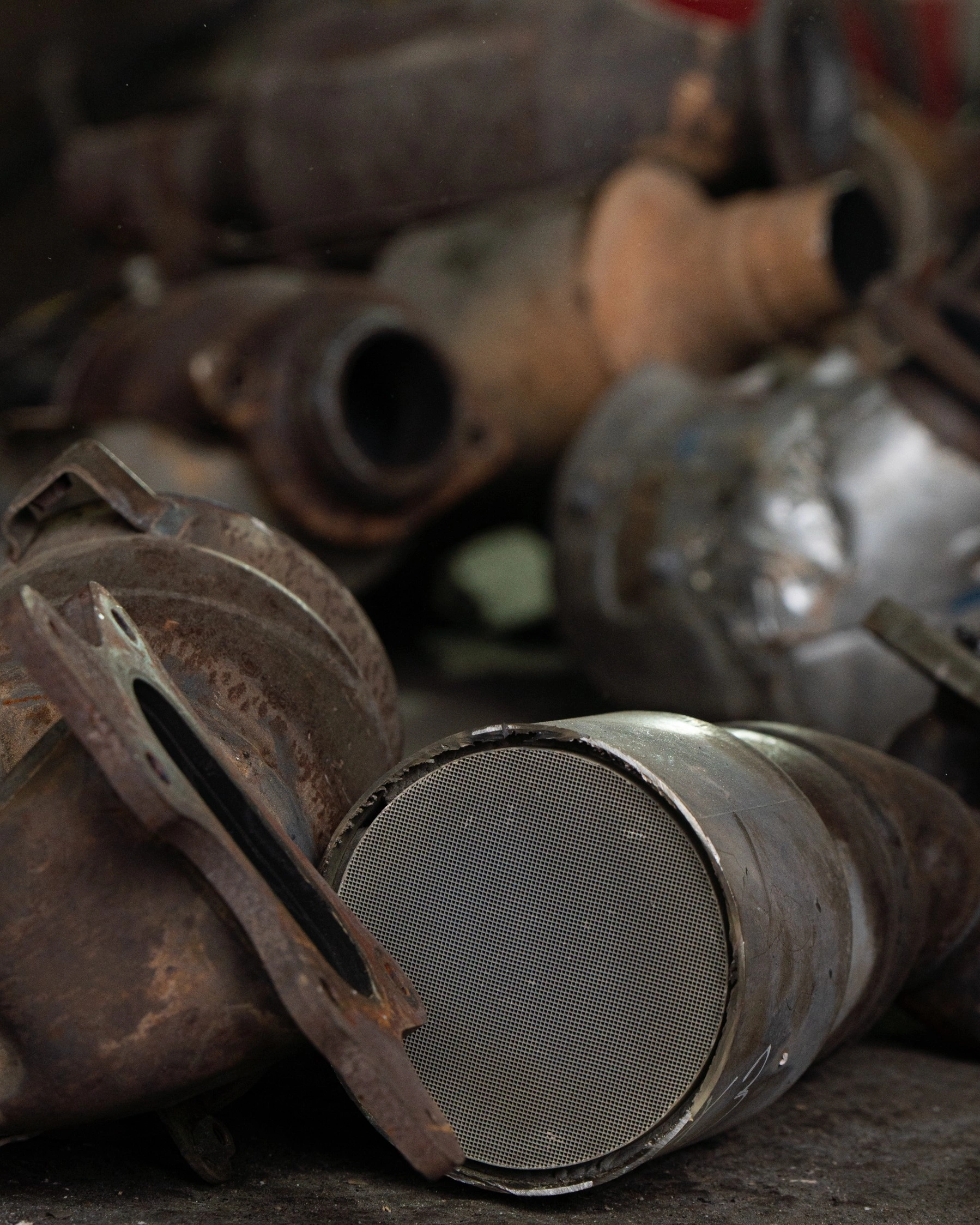
Start with identification. Most converters carry a stamped code or part number on the shell, and that code is the fastest way for a buyer to match the unit to a known application and expected metal loading. Photograph it before the unit is moved or stored, together with the make, model and year of the vehicle it came from. Next, keep the converter whole. The value sits in a thin precious-metal coating on the ceramic honeycomb inside, so cutting the shell open or knocking the honeycomb out removes the very material a buyer pays for.
Then prepare your documents and compare buyers. A legitimate buyer will ask for identification and proof of ownership, explain how the unit was assessed, and pay through a traceable method. For a side-by-side look at the main options, South Group’s comparison of the best places to sell sets out how specialist recyclers, scrap groups and private buyers differ.
I want to sell my catalytic converter: what are the steps?
If your starting point is “I want to sell my catalytic converter”, the sequence below keeps the sale quick and protects the offer:
- Record the details. Photograph the code on the shell and note the vehicle make, model and year.
- Keep it intact. Do not cut, crack or empty the unit, and store it dry.
- Gather your documents. Have your ID and any proof of ownership ready, such as a vehicle record or workshop invoice.
- Ask for a pre-assessment. Send photos and codes to a recycler for an initial indication before you travel.
- Hand it over. Visit a branch with a single unit, or book collection for larger loads.
- Confirm the offer and payment. Ask how the figure was reached and make sure payment is traceable and recorded against your details.
Following these steps in order matters. Sellers who ask for quotes first and look for paperwork later often end up with a vague offer that changes once the unit is inspected. Sellers who arrive with the code, the vehicle details and their ID usually get a firmer figure, faster.
Who are the catalytic converter buyers in South Africa?
Most catalytic converter buyers in South Africa fall into three groups: informal collectors, general scrap dealers and licensed recyclers. They differ less in how much they say they will pay and more in how they reach the figure, what they ask of you, and what happens to the unit afterwards.
Informal collectors usually offer a quick flat amount and resell the unit further up the chain. That margin, and the risk they take on by guessing, comes out of your payout. General scrap dealers can be convenient, especially if you already sell them other metals, but many apply a rough category rate rather than an analysis of the unit in front of them. Licensed recyclers identify each converter, measure or decode its platinum, palladium and rhodium content, and price that content against current metal markets. They also keep records of who sold what, which protects you if the sale is ever questioned.
| Buyer type | How they price | What to expect | Main risk |
|---|---|---|---|
| Informal collector | Flat cash offer, often by size or category | Fast, few questions | No record of the sale and no explanation of the figure |
| General scrap dealer | Rough category rate | Convenient if you already sell other scrap | Units with higher metal loading can be undervalued |
| Licensed recycler | Code identification plus measured metal content at current prices | ID checks, an explained offer and traceable payment | Takes slightly longer than a cash deal |
Source: South Group Recycling buyer guidance; Second-Hand Goods Act 6 of 2009.
When you search for scrap buyers online, results mix all three types, so it pays to ask each one the same questions. For a closer look at the buyer types and how pickup works in practice, see South Group’s guide to how scrap buyers and collection work.
What should a good catalytic converter buyer do?
A good catalytic converter buyer identifies the unit by its code, explains how it reached the offer, checks your identity and the unit’s origin, records the transaction, and pays through a method that leaves a record. It should handle single units and bulk loads with the same process, and it should welcome questions about how the figure was calculated. If a buyer cannot explain its own method in plain language, or shows no interest in where the unit came from, treat that as a reason to walk away.
How do you compare quotes from different buyers?
Compare quotes on the process behind them, not only on the headline figure. Send each buyer the same set of photos, codes and vehicle details, then ask four questions: how will the unit be identified, how is the metal content assessed, what documents do you need from me, and how and when will I be paid? Also ask what happens if the final assessment differs from the pre-assessment. A buyer that answers all five clearly is easier to hold to its offer than one that only gives you a number.
Be cautious with an offer that is far above everyone else’s. An unusually high figure quoted without seeing the unit is a common way to secure the handover, after which the price is revised downwards. A realistic offer that is explained, documented and paid as promised is worth more than a generous one that changes later.
Where to sell catalytic converters: close by or further away?
The best place is the buyer with the clearest process, not automatically the nearest one. When people work out where to sell catalytic converters, distance often decides the sale, yet the closest result is frequently a collector or yard that resells the unit rather than processing it. A recycler slightly further away that identifies the unit, explains the offer and pays traceably usually gives a more reliable outcome.
That is why a search for catalytic converter buyers near me should be treated as the start of a shortlist, not the end of the decision. Give two or three buyers the same photos, codes and vehicle details, and compare how each one answers. Distance still matters for convenience, and for larger quantities collection can remove it from the equation altogether.
The same applies if you are looking for scrap catalytic converter buyers near me for damaged, rusty or incomplete units. A legitimate recycler will still assess them, because the value lives in the metal inside rather than in how the shell looks, provided the honeycomb has not been emptied.
Where can I sell catalytic converters in South Africa?
You can sell catalytic converters in South Africa through licensed recyclers with a presence in the main metros. South Group Recycling has branches in Cape Town, Johannesburg, Durban and Pretoria, and buys from mechanics, scrapyards and private individuals alike, with a collection service for larger recycling orders. If you are still deciding where can I sell catalytic converters in South Africa, the guide to selling near you in South Africa covers each branch and what to bring.
Where can I sell a catalytic converter if I only have one unit?
A single unit is worth selling properly too. If you are asking where can I sell a catalytic converter as a one-off private seller, a recycler’s branch is usually the simplest option: the unit is assessed on the spot, and you see the basis for the offer before anything changes hands. If the nearest branch is not convenient, ask whether photos and codes can be reviewed first, so you know roughly what to expect before you travel.
How do you identify your catalytic converter before selling?
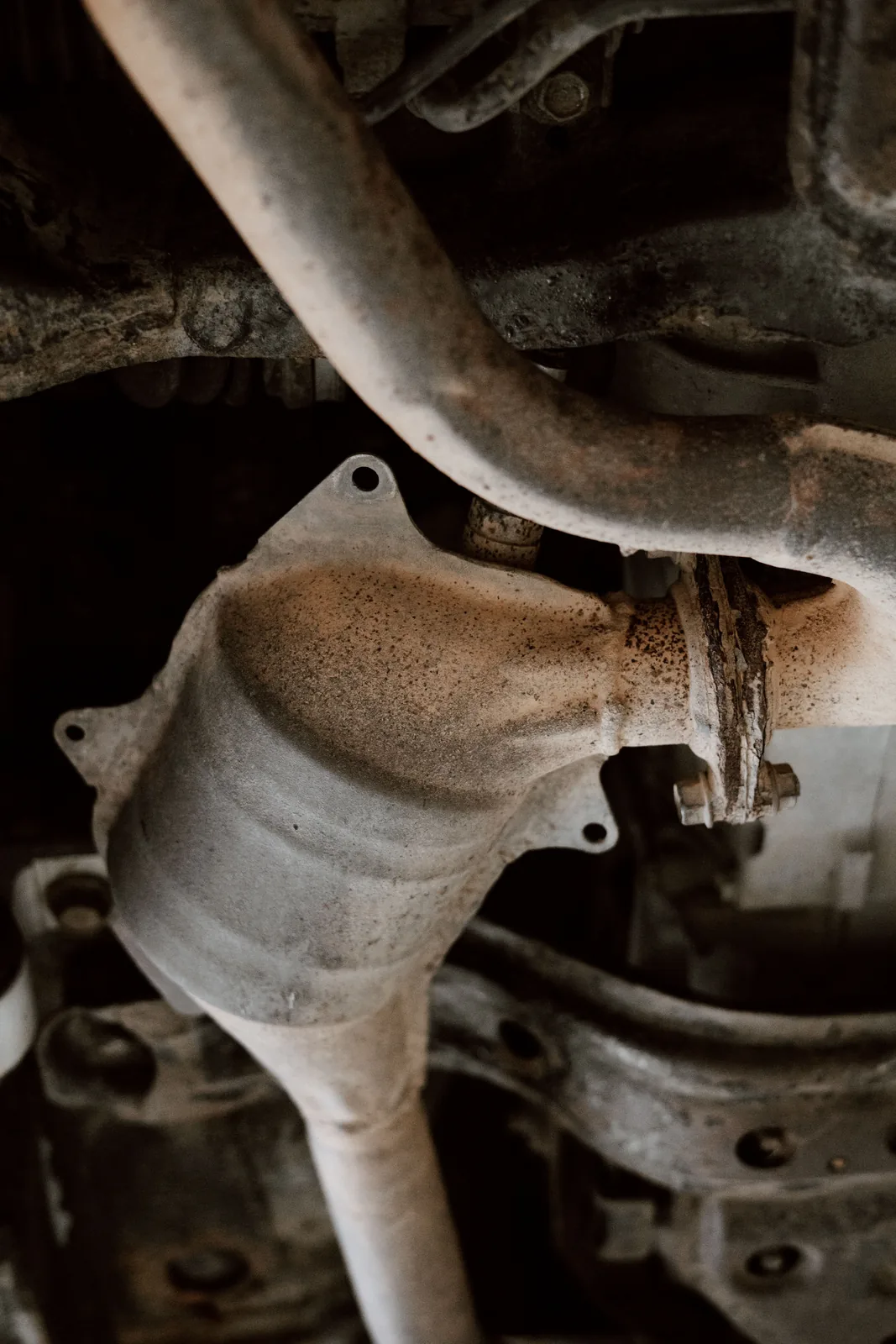
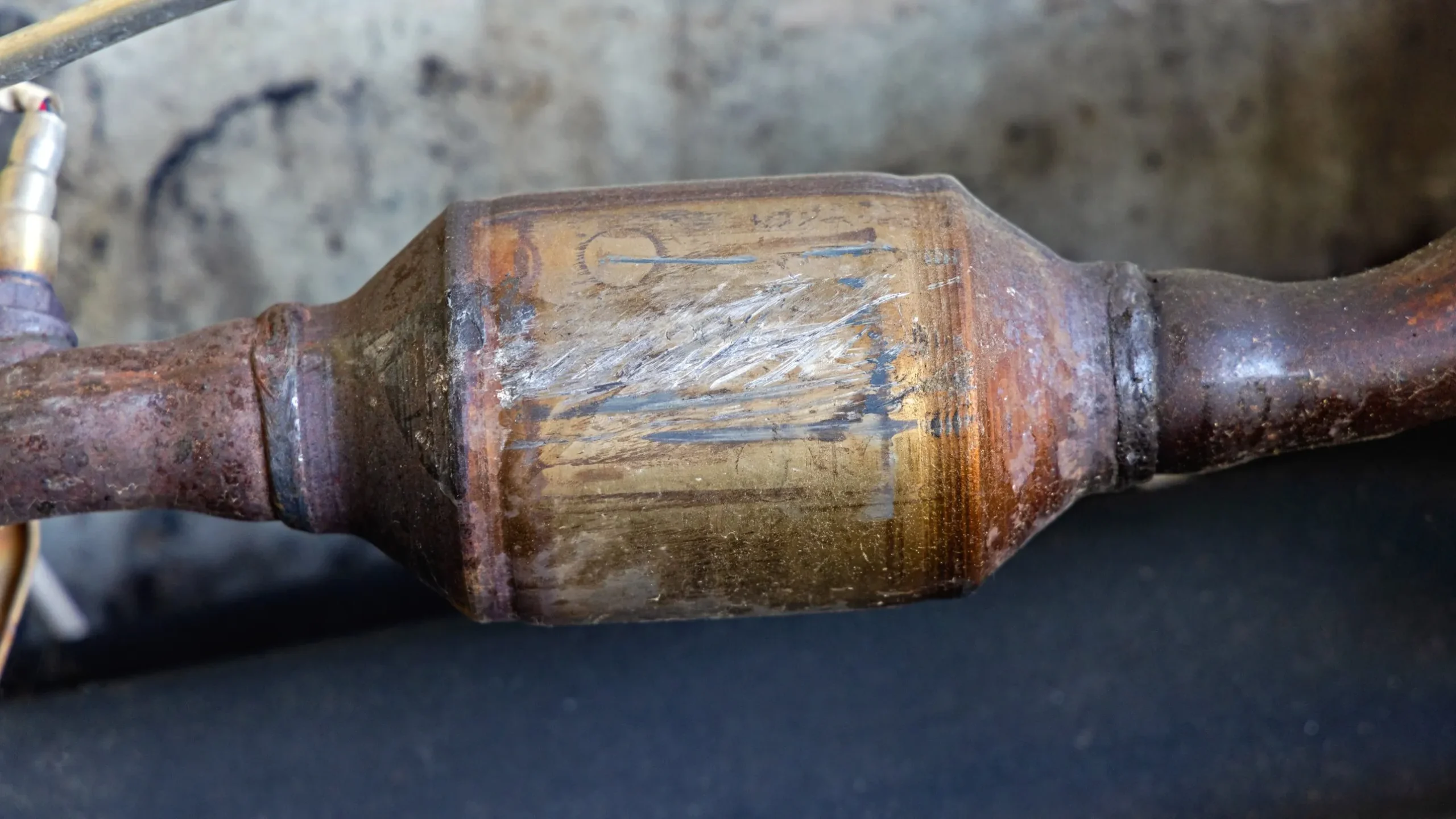
You identify a converter by its stamped code and the vehicle it came from. The code is usually stamped or engraved on the steel shell, sometimes on a heat shield or a small plate, and may be partly hidden by rust or dirt. Brush the area gently until it is readable, photograph it straight on, and keep a second photo that shows the whole unit so the buyer can see its shape and connections.
It also helps to know what you are holding. Diesel vehicles carry a diesel particulate filter (DPF) as well as an oxidation catalyst, and the two can look alike or sit in the same housing. Trucks, buses and other heavy vehicles use larger and often more complex units. If the unit is a replacement rather than the original part, say so: replacement units are assessed on their own metal content, which can differ from that of the original.
What sets the catalytic converter price?
The catalytic converter price is set mainly by how much platinum, palladium and rhodium the unit contains, valued at current market prices, then adjusted for its type and condition. Size, weight and outward appearance have little to do with it, which is why two converters that look alike can receive very different offers.
The concentration of metal in a used converter is far higher than most sellers assume. A 2023 review in the journal Crystals reports that spent auto-catalysts contain 2,000-15,000 grams of platinum-group metals per tonne, compared with 2-10 grams per tonne in natural ores. That concentration is exactly why recyclers compete for converter stock, and why a precise identification of your unit matters so much.
It also matters locally. According to the Royal Society of Chemistry, catalytic converters for cars, trucks and buses account for about half of annual platinum demand, and most commercially produced platinum comes from South Africa. Established local recyclers therefore treat a used converter as a source of recoverable metal, not as ordinary steel scrap.
| Factor | Why it changes the offer | What you can do |
|---|---|---|
| Precious-metal content | The main driver – more recoverable platinum, palladium and rhodium means a higher offer | Ask how the content was measured or decoded |
| Code or part number | Lets the buyer match the unit to a known application | Photograph every stamp before moving the unit |
| Vehicle make and model | Different applications carry different metal loadings | Record the vehicle details at removal |
| Original or aftermarket | Replacement units can carry different metal loadings from the original | Tell the buyer if the unit is a replacement |
| Condition | A cracked or emptied honeycomb loses recoverable metal | Keep the unit intact and dry |
| Metal markets | Platinum, palladium and rhodium prices move daily | Treat any quote as valid for that day |
Source: South Group Recycling; Crystals 13(4) 550 (2023); Royal Society of Chemistry.
Why does catalytic converter value move with metal markets?
Catalytic converter value moves because the metals inside are traded every day, and the offer for a unit follows them. The movement can be large. The World Platinum Investment Council reported in April 2026 that individual platinum-group metal prices had risen by between 50% for palladium and 100% for platinum over the previous twelve months.
The same analysis describes recycling as price elastic: when prices rise, more spent converters come out of storage and into the recycling chain. The council expected recycling supply to grow by 10% in 2026, after a 10% increase in 2025. For sellers, the practical lesson is to judge any quote against the day it was given, and to be wary of old price lists that do not reflect current markets.
Flat-rate offers versus measured quotes
A flat-rate offer applies one figure to a whole category of converter, usually based on size or vehicle type. A measured quote identifies the specific unit and assesses its actual metal content, typically with X-ray fluorescence (XRF) or inductively coupled plasma (ICP) analysis. A flat rate can be fast, but it has to build in a safety margin for the buyer’s uncertainty, and that margin comes out of your offer. A measured quote removes most of the guesswork, and a good buyer will explain how the figure was reached.
How do you get an accurate quote?
You get an accurate quote by giving the buyer enough information to identify the unit, then letting it assess the actual converter rather than a description. Clear photos of the code, the full unit and both ends of the honeycomb, together with the vehicle make, model and year, allow a useful pre-assessment. The final figure follows an on-site assessment of the unit itself.
Accuracy also depends on what happens before the quote. A unit that has been stored dry, kept whole and labelled with its source is easier to assess than one that has been thrown into a mixed scrap bin. If you manage several units, a simple log of codes, vehicle references and removal dates speeds up identification and makes it easier to compare offers over time. South Group’s guide on protecting a unit’s value before recycling covers each of these steps in more detail.
What your sale record should show
What lowers a quote before it is given?
The most common causes of a lower quote are preventable: a cut or emptied shell, a cracked honeycomb, missing or unreadable codes, and no record of where the unit came from. None of these means the unit is worthless, but each makes identification harder or removes recoverable metal. Brush off loose dirt if you need to read a code, and leave everything else as it is.
Should you sell, get it priced, or list it for sale?
For most sellers, selling to a licensed recycler gives the best balance of value and safety, while getting a quote first suits anyone unsure of what the unit is worth. Listing a used converter for private sale is the riskiest route, because the buyer is guessing at the value and you carry the risk of an unverified transaction.
| Route | Best for | Trade-off |
|---|---|---|
| Sell to a licensed recycler | Most sellers who want a fair, documented sale | The offer follows current metal prices |
| Get it priced first | Anyone unsure of the unit’s worth | A quote reflects that day’s market |
| List it for private sale | Narrow cases, such as a complete, traceable unit for regulated reuse | The buyer guesses the value, and the sale carries more risk |
Source: South Group Recycling selling routes and valuation practice.
If you are weighing these options for a specific unit, the guide on how to sell, price or list a used unit sets out when each route makes sense.
What do you need to sell a catalytic converter legally?
You need valid identification and, ideally, proof that the converter came from your vehicle, workshop or business stock. Selling your own converter is lawful, but dealers carry legal duties around who they buy from, and a reputable buyer will apply them to every sale.
South Africa’s Second-Hand Goods Act 6 of 2009 requires dealers to record the identity of the person they acquire goods from, including full names, address, contact number and identity number, and to keep a copy of the seller’s identity document or passport. The Act also says a dealer may not take goods into possession unless it is convinced on reasonable grounds that the seller is the owner, or is authorised to sell them. In practice, that is why a legitimate buyer asks about the unit’s origin before making an offer.
If you do not have a formal document for an older unit, gather what you can: the vehicle registration details, a workshop invoice for the replacement, or photos of the unit before it was removed. A buyer can then judge whether the evidence is reasonable. What you should not expect is a reputable buyer that asks for nothing at all.
| What to bring | Why it matters |
|---|---|
| Original ID document or passport | Dealers must verify and keep a copy of the seller’s identity |
| Proof of ownership | Dealers must be satisfied on reasonable grounds that the seller owns the goods |
| Code photos and vehicle details | Speeds up identification and supports an accurate offer |
| Work orders or job cards (workshops and fleets) | Documents the source of each unit in a batch |
Source: Second-Hand Goods Act 6 of 2009, sections 21 and 23; South Group Recycling.
Which red flags should make you walk away?
Walk away from a buyer that quotes without seeing or identifying the unit, refuses to explain how it reached the figure, asks no questions about where the converter came from, wants to deal in cash with no paperwork, or changes the offer after collection without a clear reason. Each of these leaves you with less protection, and a buyer that ignores ownership checks is not working to the standard the law expects of dealers.
How do collection and payment work?
Single units are usually taken to a branch for assessment, while larger quantities can be collected from your site. Either way, the unit is logged, identified and assessed in the same way, so the route you choose does not change how it is valued. Payment follows once the assessment is complete, and a compliant buyer records the transaction against your details.
Ask any buyer, before you commit, how and when it pays, and whether the payment method leaves a record. A traceable payment protects you as much as the buyer: if a question is ever raised about the sale, you can show exactly what was sold, to whom and for how much.
A little preparation makes collection smoother. Count the units, label each one with its reference, keep them dry and together, and have the related documents ready for the person who collects them. If units are loose or broken, bag them so no material is lost on the way. The clearer the batch, the quicker it can be logged and assessed at the other end.
What a fair catalytic converter quote should include
Selling as a workshop, scrapyard or fleet
Workshops, scrapyards, dismantlers and fleets get the most from a buyer with repeat intake and a collection service, because mixed batches need consistent identification and a clear record per unit. Keep each unit labelled with its vehicle reference, code and removal date, and keep the related job card. That record speeds up assessment, supports the ownership checks the law requires, and makes it easy to compare results across collections. South Group Recycling offers collection for larger recycling orders across its regions.
Why does selling to a recycler matter beyond the price?
Selling to a licensed recycler keeps precious metals in use and keeps stolen units out of the supply chain. Platinum-group metals can be recovered and returned to industry, and recycling already plays a real part in supply: the Royal Society of Chemistry puts platinum’s recycling rate at more than 30%, based on British Geological Survey data.
The same source rates platinum’s supply risk at 7.6 out of 10 and names South Africa as the largest producer and holder of reserves. For a country at the centre of platinum supply, recovering metal from used converters is a practical way to keep that resource in circulation rather than in drawers, garages and scrap piles.
There is a compliance benefit too. Every documented sale through a licensed buyer makes it harder for stolen converters to find a market, which protects honest sellers and the wider trade. A fair offer and a responsible process are not in conflict; with the right buyer you get both.
Conclusion
Selling a catalytic converter in South Africa comes down to a few decisions made in the right order: identify the unit, keep it whole, gather your documents, choose a buyer that measures rather than guesses, and judge the offer against current metal prices. Get those right and an old converter becomes a fair, documented payout rather than a gamble on the first cash offer.
If you are ready to sell, South Group Recycling buys single units and bulk loads in Cape Town, Johannesburg, Durban and Pretoria, with collection for larger orders. Contact the team or book a collection through South Group’s recycling service to get your unit assessed.
FAQ
Who buys catalytic converters in South Africa?
Informal collectors, general scrap dealers and licensed recyclers all buy catalytic converters in South Africa. Licensed recyclers usually give the most reliable offer, because they identify each unit and price its measured platinum, palladium and rhodium content against current markets. South Group Recycling buys in Cape Town, Johannesburg, Durban and Pretoria.
Is it legal to sell a catalytic converter in South Africa?
Yes, selling your own catalytic converter is legal. Under the Second-Hand Goods Act, dealers must record your identity, keep a copy of your ID document and be satisfied on reasonable grounds that you own the unit, so expect a legitimate buyer to ask for ID and proof of ownership.
How is the price of a catalytic converter worked out?
The price is based on the platinum, palladium and rhodium the unit contains, valued at current market prices and adjusted for its type and condition. A buyer identifies the unit by its code and assesses its metal content, often with XRF or ICP analysis. Size and appearance have little effect on the figure.
Why do two similar-looking converters get different offers?
Converters that look alike can carry very different amounts of precious metal, depending on the vehicle application, whether the unit is original or a replacement, and its condition. That is why an accurate offer depends on identifying the specific unit rather than judging it by its size or shape.
Can I sell a damaged or rusty catalytic converter?
Yes. A damaged or rusty unit usually keeps most of its value, because the metal sits in the coated honeycomb inside rather than in the shell. The main exception is a unit whose honeycomb has been emptied or badly broken, which removes recoverable metal and lowers the offer.
Should I cut open my catalytic converter before selling it?
No. Cutting the shell or removing the honeycomb destroys identifying features and can lose recoverable metal, which lowers the offer. Keep the unit whole and dry, photograph its code, and let the recycler handle processing.
Why do catalytic converter prices change so often?
Prices follow the market for platinum, palladium and rhodium, which are traded every day. The World Platinum Investment Council reported that platinum-group metal prices rose by between 50% and 100% in the twelve months to April 2026, so any quote is only meaningful against the day it was given.
Does South Group Recycling collect catalytic converters?
Yes. South Group Recycling offers collection for larger recycling orders, which suits workshops, scrapyards, dismantlers and fleets. Single units can be brought to a branch in Cape Town, Johannesburg, Durban or Pretoria for assessment.